Case study
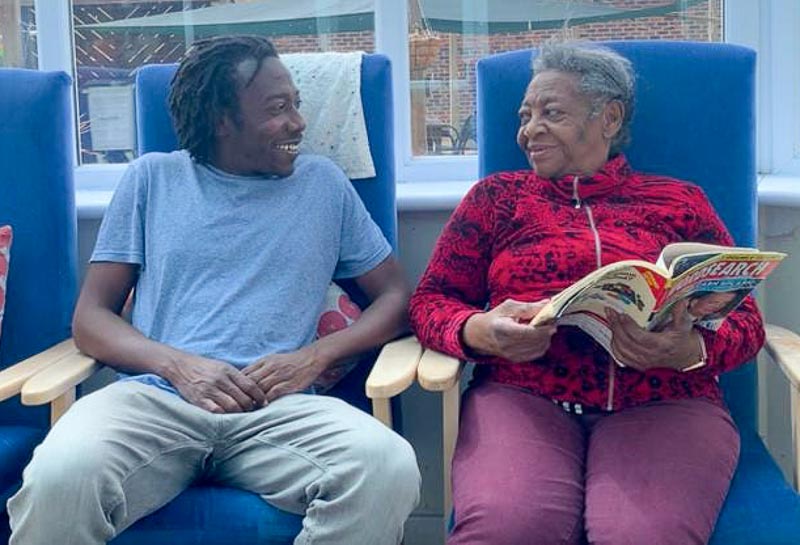
Founded in 2020 by David Grey, GG Care was born from personal experience. When his grandmother 'Gran Gran' (GG) was diagnosed with dementia, David became her carer and discovered that existing solutions consistently failed to meet the needs of carers and care recipients. In response, he built GG Care to transform care through intelligent, compassionate technology. Central to this is SleepWell, an app developed to help carers and care recipients co-ordinate care more effectively.
After securing NIHR grant funding in 2025 to support its next stage of development, David turned to Opencast for a second time. Having previously partnered in 2024, Opencast was asked to collaborate again and offered low bono support as part of its social impact programme. With an estimated 982,000 people living with dementia in the UK and around 700,000 unpaid carers, the importance of GG Care's mission could not be greater.
Challenge
A new idea, limited resource
At the heart of SleepWell is its ability to support caregivers through timely, personalised prompts, known as Interactive Reminders (IRs). These reminders help individuals manage daily tasks independently.
The challenge was ensuring these reminders could reliably detect whether the person receiving them had acted upon them. To achieve this, GG Care needed a reliable way to integrate data from smart devices such as heart rate monitors, motion sensors, and sound detectors. This would enable carers to understand whether assistance was needed and confirm that instructions had been followed by patients within the home environment.
To explore and validate this concept, GG Care secured funding from the National Institute for Health and Care Research’s (NIHR) Invention for Innovation (i4i) FAST programme, which supports innovative projects.
The funding was grounded in looking to investigate both a technical solution and the viability of the solution and asked the question: ‘Can we make Interactive Reminders smart using smart home devices?’
As the NIHR grant focused on Acquired Brain Injury (ABI), which shares similarities with dementia, but is distinct, David chose to focus on sleep, an essential part of rehabilitation for people living with an ABI.
To accelerate development and build a compelling Minimum Viable Product (MVP) that could engage stakeholders and validate the concept, GG Care partnered with Opencast to deliver the technical solution, leveraging our experience to move quickly and confidently from idea to implementation.
Response
Knowledge sharing and MVP build
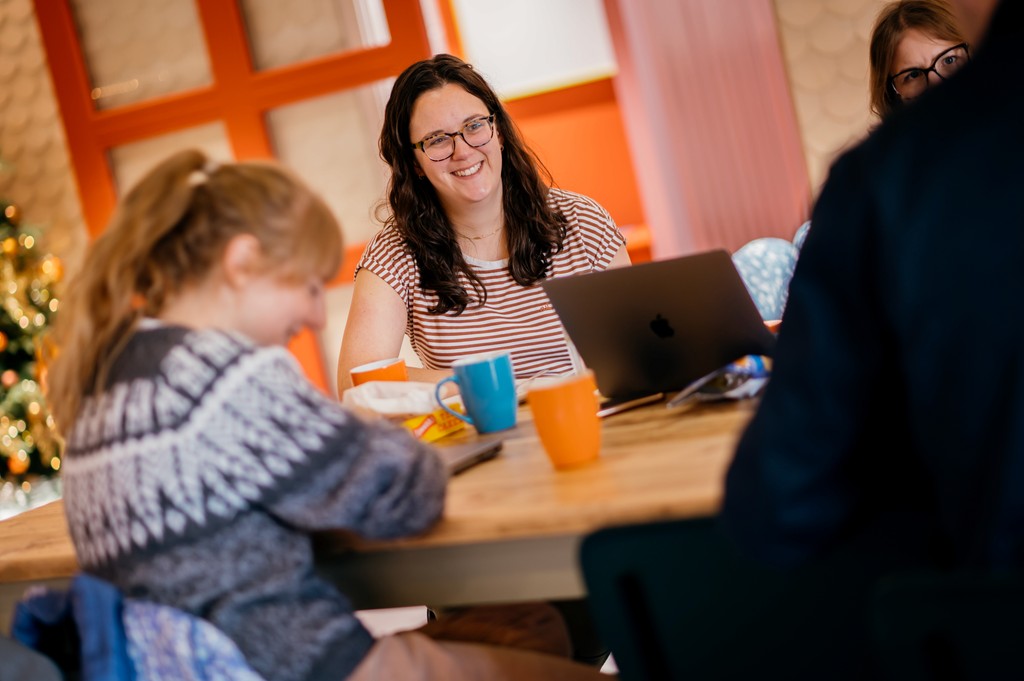
Opencast assembled a team to work side by side with David, including:
An Interaction Designer
A Technical Architect
Software Developers
Opencast consultants applied prioritisation techniques like MoSCoW and Now, Then, Later to identify GG Care’s priorities and highest-impact goals, allowing the team to focus development effort on where it mattered most. Regular stand-ups kept communication open, while project tracking software Jira was used to track tasks and build a backlog for future features.
Combining user-centred design (UCD) and technical expertise, Opencast helped bring GG Care’s vision to life. Using visual workspace tool Miro, the team developed medium-fidelity wireframes and journey maps rooted in technical feasibility. Our UCD team conducted a comprehensive design review, offering practical recommendations and sharing best practice guidance on accessibility (WCAG standards), as well as UK Government and NHS design principles. These well-tested, accessible patterns gave David and GG Care’s partners the confidence and tools to continue building a user-friendly product that feels familiar and intuitive to users.
Building on the design work, our consultants turned concepts into reality by developing and testing integrations with devices such as the Withings Sleep Analyzer mat. One of the team used the mat at home to test APIs and data pairing first-hand.
Together, the Opencast and GG Care team developed a working MVP within the timeframe of the eight-week project, which included:
A secure login and registration journey, with email and password reset, along with device connection telephone services.
A home landing page for GG Care providing access to view devices and reminders.
Functionality to add or remove the Withings sleep mat device to the GG Care service, as well as customisation of the device name and locations.
The ability to set and delete sleep reminders, including reminders to get up from bed and to go to bed. Reminders can be set by the user, adjusting time and date frequency, or activated using sleep data collected from the mat.
In addition to the reminder to wake up, Project SleepWell also automates a well-being check.
As the project concluded, Opencast ensured GG Care was equipped for success beyond our direct involvement. We documented key design and software decisions in Confluence, covering accessibility, sustainability, security and compliance.
Alongside this, we supported David in shaping a practical project roadmap, empowering him to continue developing the product confidently and independently.
Impact
A stable foundation for future progress
Project SleepWell is a first-of-its-kind system that integrates data and signals from commercial smart home devices with an AI Voice agent to create context- aware reminders delivered via the telephone. The aim is to reduce alert fatigue for the carer and care recipient by having the system recognise when the care recipient needs a reminder and adhere to it, while reinforcing stable routines.
Opencast helped GG Care articulate its ideas, leverage UCD expertise and technical best practice, and build a product MVP. These foundations place GG Care in a much stronger position to secure future funding and engage potential partners, investors and stakeholders.
A great example of this momentum came in October 2025, when David showcased the project at the Care Show Birmingham, demonstrating not only the product’s potential, but also the impact of a well-supported, collaborative development process.
In the short term, this collaborative effort has brought GG Care significantly closer to a full product prototype, something David can now use to complete his research and demonstrate the concept and its potential. It marks a major step toward a production-ready solution that could make a real difference for both carers and those receiving care.
Looking ahead, GG Care plans to expand its capabilities by integrating more smart devices and harness data to power AI-driven insights into patient behaviour and provide more appropriate Digital Interventions. These next steps will enable further personalised support and proactive care, continuing a mission Opencast is proud to have supported.
Access case study
Get your copy of Opencast’s case study, just share your name and email.

Joining forces with The Fore to show the impact of non-profits
Venture philanthropy fund The Fore teamed up with Pro Bono Economics on a project to help them measure the collective and individual impact of the non-profits they fund. Working on a pro bono basis, Opencast helped to develop a bespoke data collection survey. Our collaboration successfully delivered a fully functional, cost-effective and GDPR-compliant survey platform in just six weeks.
Case study
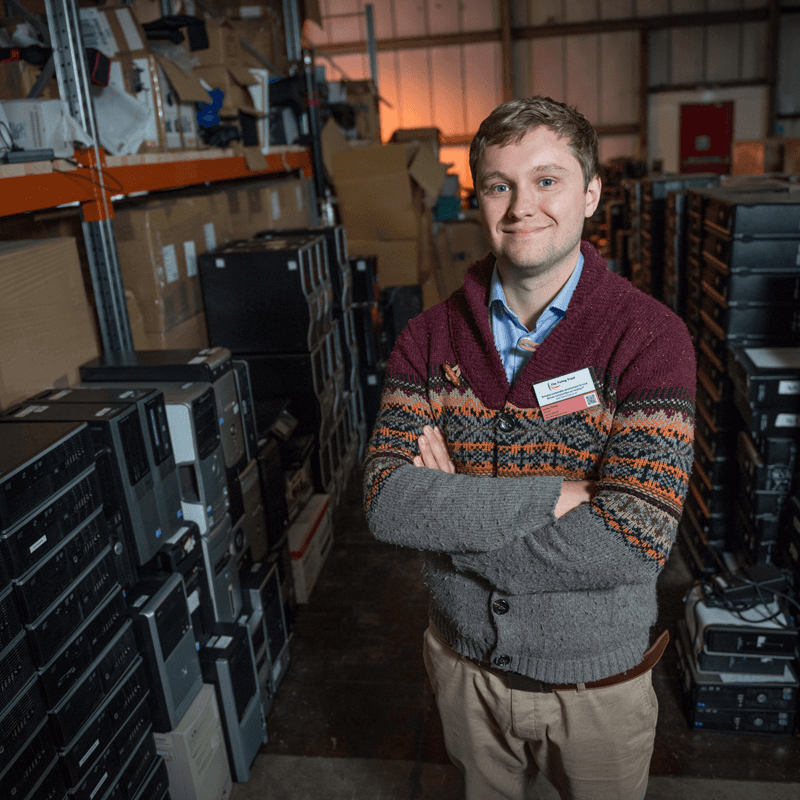

Helping the Turing Trust ship refurbished tech to schools
The Turing Trust was set up by Alan Turing’s family to honour his legacy. He’s generally regarded as the father of modern computing – but he was also committed to helping others, believing in the power of education in helping people fulfil their potential. The trust’s aim is to ensure that one day every child will be able to enjoy the transformative power of technology that Alan envisaged.